BLOGS
Explore our blog for insights on cutting-edge technology and discover how our agency delivers top-notch services tailored to meet your needs.
Mobile App Security in 2026: Risks Every Business Should Know
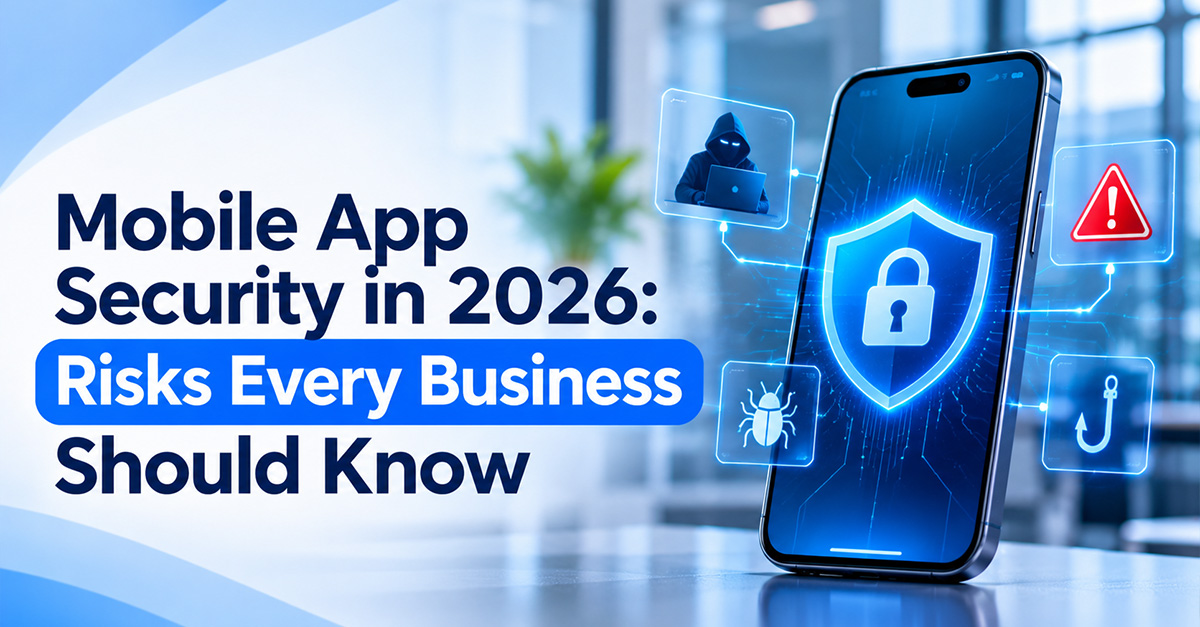
Mobile apps have become essential for businesses, from managing customer information and processing payments to delivering services and automating operations. However, as mobile applications handle increasingly sensitive data, security risks are becoming more complex. A poorly secured app can expose user information, disrupt business operations, and damage a company's reputation.
In 2026, mobile app security is no longer just a technical requirement. It is a fundamental part of building reliable digital products.
Mobile App Security Risks Businesses Should Watch For
Insecure Data Storage:
Apps that store passwords, session tokens, or personal information without proper protection can expose sensitive data if a device is compromised.
Weak Authentication:
Poor login security, weak password policies, or improperly implemented biometric authentication can increase the risk of unauthorized account access.
Unsecured Network Communication:
Apps communicating over poorly secured connections may expose data to interception, particularly when users connect through untrusted networks.
Vulnerable APIs and Integrations:
Mobile applications rely on backend APIs. Weak access controls, excessive permissions, or improperly validated requests can expose business systems and customer data.
Reverse Engineering and App Tampering:
Attackers can inspect mobile app packages to identify exposed credentials, internal logic, or security weaknesses. Poorly protected applications may also be modified and redistributed.
How Businesses Can Improve Mobile App Security
Security should be integrated throughout the mobile app development lifecycle, rather than treated as a final testing step. Businesses should use secure data storage, encryption, strong authentication, regularly updated dependencies, and properly configured APIs.
Security testing should cover both Android and iOS applications, including cross-platform apps. Frameworks such as the OWASP Mobile Application Security Verification Standard (MASVS) provide a structured approach to evaluating mobile app security across storage, authentication, network communication, privacy, and other critical areas.
OWASP Mobile Application Security+1
Conclusion
Mobile app security is an ongoing responsibility that extends beyond launch day. As applications become central to business operations, protecting user data and maintaining trust should be priorities from the earliest stages of development.
At Line Code, we believe secure mobile applications begin with thoughtful architecture, responsible development practices, and continuous improvement. Building an app that works well is important, but building one that users can trust is what makes it sustainable.